How Eye Exams Work in Veterinary Medicine: What We Look For and Why It Matters
At Summit Veterinary Care, we are proud to serve the Northern Virginia community with compassionate, high-quality veterinary care in a warm and welcoming environment. Eye health is one of the most important parts of your pet’s overall well-being, but it’s also something that can change quickly and quietly. A thorough eye exam helps us catch problems early, often before they become painful or affect vision.
Why Eye Exams Are So Important
Pets rely heavily on their vision to navigate the world, and many eye conditions can progress without obvious early signs. What may start as mild redness or squinting can sometimes develop into more serious issues if left untreated.
Routine eye exams help us detect:
- Infections
- Corneal injuries or ulcers
- Cataracts
- Glaucoma (increased pressure in the eye)
- Allergic or inflammatory conditions
- Breed-related eye abnormalities
Early detection often means simpler treatment and better long-term outcomes.
Step One: A Gentle External Examination
Every eye exam starts with observation. Before using any tools, we look closely at:
- Eyelid position and symmetry
- Redness or swelling
- Discharge or tearing
- Squinting or discomfort
- Third eyelid position
This helps us understand how your pet is feeling even before we begin more detailed testing.
Step Two: Using Specialized Ophthalmic Tools
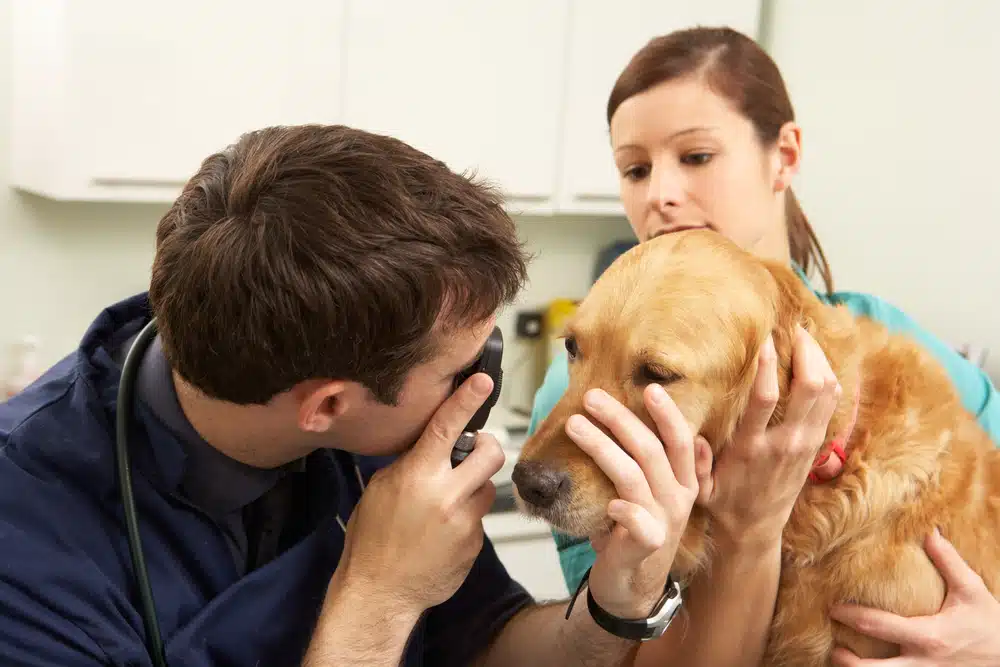
To get a closer look, we use tools designed specifically for eye evaluation:
- Ophthalmoscope – allows us to examine the structures inside the eye, including the retina and optic nerve
- Magnification and focused light to assess surface changes and clarity
- Gentle restraint techniques to keep your pet comfortable and still
These tools help us see details that are not visible during a basic physical exam.
Step Three: Fluorescein Staining (Checking for Corneal Injury)
One of the most common and important eye tests is a fluorescein stain. This involves placing a safe, orange dye on the surface of the eye.
The dye highlights:
- Scratches or ulcers on the cornea
- Areas where the outer surface of the eye is damaged
This test is quick, painless, and extremely helpful in diagnosing injuries that may otherwise be missed.
Step Four: Measuring Tear Production
Healthy eyes need adequate tear production to stay lubricated and protected. We may perform a tear test to evaluate whether your pet is producing enough moisture.
Low tear production can lead to dry eye (keratoconjunctivitis sicca), which can cause discomfort, discharge, and long-term damage if untreated.
Step Five: Checking Eye Pressure
In some cases, we measure intraocular pressure to screen for glaucoma. This is done using a small handheld device that gently touches the surface of the eye.
Elevated eye pressure can be painful and may lead to vision loss if not treated quickly, so this step is especially important when symptoms like squinting or cloudiness are present.
Step Six: Examining the Deeper Structures
When needed, we evaluate the internal structures of the eye in more detail. This helps us assess:
- The lens (for cataracts or cloudiness)
- The retina (for vision function)
- Blood vessels and optic nerve health
These findings help us determine whether vision is affected and what treatment options are best.
How We Keep Eye Exams Low-Stress
We know eye exams can feel sensitive for pets, especially if their eye is already uncomfortable. That’s why we focus on:
- Gentle, minimal restraint techniques
- Slow, calm handling
- Treat-based positive reinforcement
- Pausing when needed to reduce stress
Our goal is always to gather the information we need while keeping your pet as comfortable as possible.
What Happens After the Exam
Once the exam is complete, we’ll explain everything we found in clear, simple terms. If treatment is needed, we’ll walk you through options, which may include:
- Eye medications (drops or ointments)
- Pain relief or anti-inflammatory treatment
- Follow-up exams to monitor healing
- Referral for advanced ophthalmic care if needed
We believe you should always understand what’s going on with your pet’s eyes—and why we’re recommending a specific plan.
Protecting Your Pet’s Vision
Eye conditions can progress quickly, but with prompt attention, many are highly treatable. If you notice squinting, redness, discharge, or any change in your pet’s eyes, it’s always worth having them checked.
At Summit Veterinary Care, we’re here to help protect not just your pet’s health, but their ability to see and experience the world comfortably.
Share This Story, Choose Your Platform!
About the Author: Summit Veterinary Care